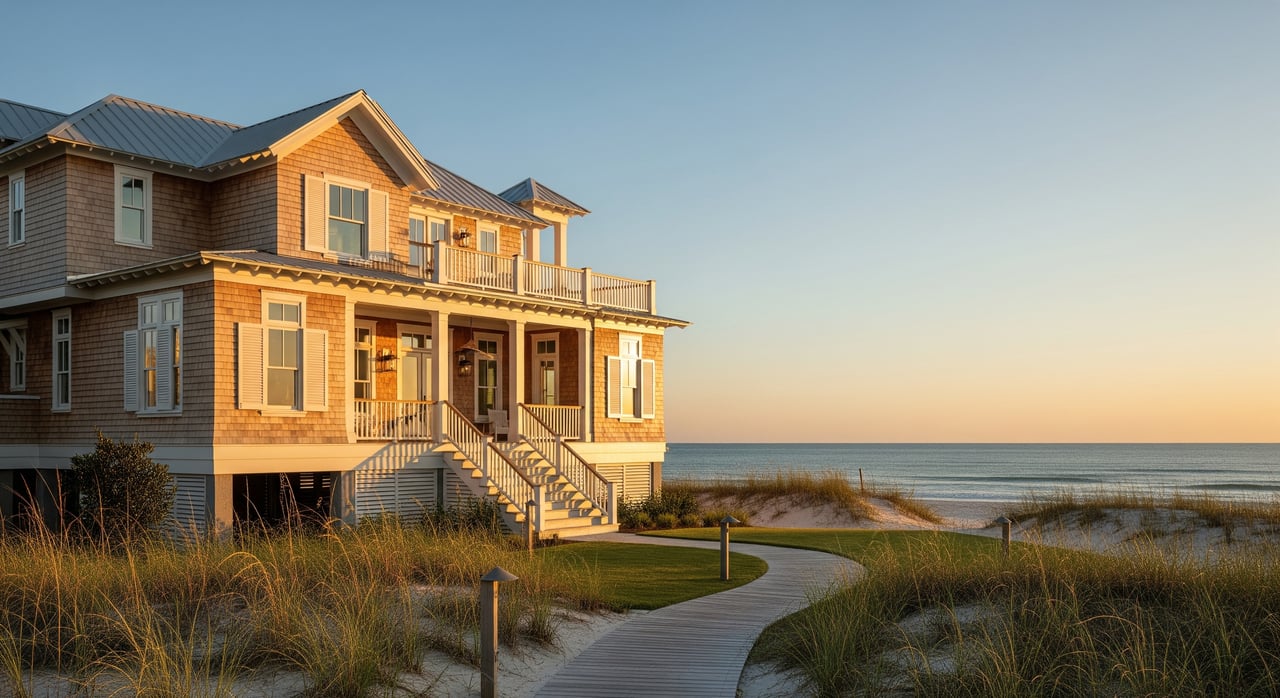
Thinking about building or renovating in Watersound and wondering how to get your plans approved? The Architectural Review Board is there to protect community character, which means clear rules and a defined process. You want to avoid surprises, keep your project moving, and make choices that fit the neighborhood. In this guide, you’ll learn the key design rules, how the review works, and how to coordinate county permits so you can plan with confidence. Let’s dive in.
What the ARB covers in Watersound
Watersound is a collection of master-planned neighborhoods by The St. Joe Company. Each area can have its own design guidelines and review board. The ARB reviews exterior design, site planning, landscaping, and materials to protect neighborhood character.
Start with the right documents. Neighborhood “Important Documents” pages host the PDFs you need. For example, the Watersound Origins page lists the current design guidelines and resources you will use for submittals. You can browse the Watersound Origins Important Documents page to locate the right files.
Find your neighborhood rules
- Watersound Origins uses the “Guide for the Creation of Watersound Origins,” which outlines setbacks, heights, materials, and submittal info. Review the Origins Design Guidelines PDF.
- Watersound Camp Creek has its own design guide for estate lots with rules for massing, parking, and accessory structures. See the Camp Creek Design Guidelines PDF.
- Some associations, such as Watersound West Beach, keep homeowner resources behind a member portal. If you are in West Beach or Watersound Beach, contact the HOA for access. Visit the Watersound West Beach HOA site.
- For broader design intent, the WaterSound Pattern Book shows the materials and massing style that shape the community. Use it as a reference where neighborhood rules are not specific. Explore the WaterSound Pattern Book overview.
Key design rules to expect
Heights and massing
Many Watersound guidelines cap overall building height at or near 50 feet, with additional limits on roof ridges and special elements like widow’s walks or towers in some areas. Always confirm the exact limits for your lot in the current neighborhood guide. The Origins Design Guidelines outline typical expectations.
Setbacks and finished floors
Typical setbacks include about 15 feet in front, 10 feet at the rear, and side yards that vary by neighborhood, often 5 to 10 feet. Finished floor elevations must follow the recorded plat and flood requirements. Walton County floodplain rules also apply, so confirm with the County before finalizing. See the County’s Building Requirements to align elevations with code.
Parking, garages, and drives
On-site parking is required, with a minimum of two spaces and recommendations for guest capacity. ARB rules define driveway widths and acceptable materials such as pavers, concrete, and gravel. Garage bay sizes and recommended depths are often specified in the neighborhood guide. Details are noted in the Origins Design Guidelines.
Materials and color palettes
Expect a coastal palette of traditional materials such as wood or fiber-cement siding, stucco, brick, and stone. ARB rules usually limit the number of primary materials and require a coordinated wall, trim, and accent color scheme. Submit material samples, cut sheets, and a color board with your package.
Roofs and solar
Allowed roof materials include standing seam metal, architectural shingles, and similar options. Roof-mounted solar is allowed, and ground-mounted arrays are not. Plan locations that reduce street visibility and include manufacturer specs in your submittal. See the Origins Design Guidelines for solar direction.
Porches and outdoor living
Porches are strongly encouraged. Many guidelines call for a minimum depth of 8 feet so spaces are furnishable and usable. Screens, railings, and any enclosure should maintain a true porch look.
Accessory buildings, pools, and docks
Carriage houses and detached garages are allowed with height and style limits that match the main home. Pools and cabanas are generally permitted, subject to setbacks and screening. Private docks are prohibited in some neighborhoods, including Origins. Confirm rules in your community’s guide.
Windows, lighting, and mechanicals
Window proportions with a vertical emphasis are typical, and reflective films are not allowed. Exterior lighting should be limited and shielded to protect the night sky. Group and permanently screen mechanical equipment so it is not visible from public view.
Landscape and dune lake protection
Use the approved plant list and native coastal species where required. Many Watersound properties are near coastal dune lakes, and clearing within protected buffers is restricted. Review your neighborhood guide and Walton County protections. The Camp Creek Design Guidelines address landscape rules that interact with County protections.
How the ARB review works
Start with the plat and guide
Your recorded plat shows setbacks, finished floor elevation, and any wetland or coastal zones. Pair the plat with your neighborhood’s design guidelines from the Important Documents page so your concept starts within the rules.
Ask for a pre-submittal review
Engage an architect who knows Watersound and request a concept or pre-submittal review. Early feedback can prevent rework. The Camp Creek guide invites owners and architects to reach out to the Design Review Board, as noted in the Camp Creek Design Guidelines.
What a complete package includes
A typical complete submittal includes:
- Scaled site plan with setbacks, drives, finished floor elevations, and existing trees or buffers.
- Elevations on all sides with height callouts, materials, and roof sections.
- Landscape plan with approved plant list, grading, drainage, and mechanical screening.
- Color board, samples, exterior lighting and fixture schedule, and manufacturer cut sheets for windows, doors, roofing, solar, HVAC, and pavers.
- Driveway and hardscape materials and dimensions, plus garage bay sizes and depths.
Where to submit and who to contact
Neighborhood guides list submittal contacts and current instructions. For Origins, questions and submittals go to the design review contact noted in the guide, including [email protected] and the named staff contact. See the Origins Design Guidelines for details.
How long review takes
Timing varies with project complexity and meeting cadence. Many design review boards meet monthly or twice monthly, which means several weeks from submittal to comments. For general cadence examples, see a municipal DRB schedule like Hilton Head Island’s DRB calendar. Plan for revisions.
Fees and authority
Guidelines or HOA sites list application fees and forms. ARB authority comes from the recorded CC&Rs, which give the board power to enforce design standards. You can find governing documents and forms on the Important Documents page.
Coordinate county permits early
Design review is separate from government approvals. Coordinate early so ARB comments and permits line up.
Walton County planning and building
Walton County reviews planning items such as stormwater, parking, and buffers before building permits. Learn the process here: Walton County Building Permit Review.
Flood zones and finished floors
If your lot is in a special flood hazard area, your finished floor must meet or exceed Base Flood Elevation per the Florida Building Code and County rules. See Walton County Building Requirements.
Dune lakes, buffers, and wetlands
Properties near coastal dune lakes face additional protection rules and limited clearing in buffer zones. County approvals, and sometimes state or federal permits, may be needed. Review County permitting guidance at Walton County Permits and code references such as Sec. 1.13.09.
Smart tips to avoid delays
- Confirm the exact neighborhood guide for your lot before design begins. The rules differ by Origins, Camp Creek, Watersound Beach, and West Beach.
- Pull the recorded plat and engineer’s finished floor elevation early and design to those constraints.
- Use the approved plant list and a native coastal palette in your landscape plan.
- Submit a complete package with site, elevations, materials, lighting, and mechanical screening in one delivery.
- Plan porches at least 8 feet deep to match community intent and avoid redesigns.
- Integrate solar on roof slopes that reduce visibility and include full manufacturer cut sheets.
- Coordinate ARB review with County planning to keep both tracks moving.
- If you plan to rent, verify neighborhood rental rules. Some Watersound areas, including Origins and Camp Creek, prohibit short-term vacation rentals in their guidelines.
Final word
Designing to Watersound’s ARB is straightforward when you start with the right guide, prepare a complete package, and align with Walton County permits. A little planning up front can save you weeks later and help you create a home that fits the community’s coastal character. If you want local, concierge-level guidance from offer to closing, reach out to Sold in Paradise for neighborhood insights and a smooth path to ownership.
FAQs
How long does the Watersound ARB review take?
- Many boards meet monthly or twice monthly, so expect several weeks for review plus time for revisions and County coordination.
Which Watersound guideline applies to my lot?
- Start with your neighborhood’s Important Documents page, then pull the current design guide for Origins, Camp Creek, Watersound Beach, or West Beach.
Are solar panels allowed in Watersound neighborhoods?
- Roof-mounted solar is allowed in the guidelines cited, and ground-mounted arrays are not. Plan for low-visibility placement and submit manufacturer specs.
What setbacks and heights are common in Watersound?
- Many guidelines use front setbacks around 15 feet, rear 10 feet, sides 5 to 10 feet, and overall height near 50 feet, but you must confirm per neighborhood and plat.
Do I need ARB approval for exterior paint or a small deck?
- Most communities require ARB approval for exterior changes, including paint, decks, and fences. Always confirm with your neighborhood’s DRB before work.
How do Walton County permits affect my design?
- The County reviews planning and flood requirements and issues building permits. Coordinate ARB approvals with County reviews to avoid conflicts on items like finished floor elevation.