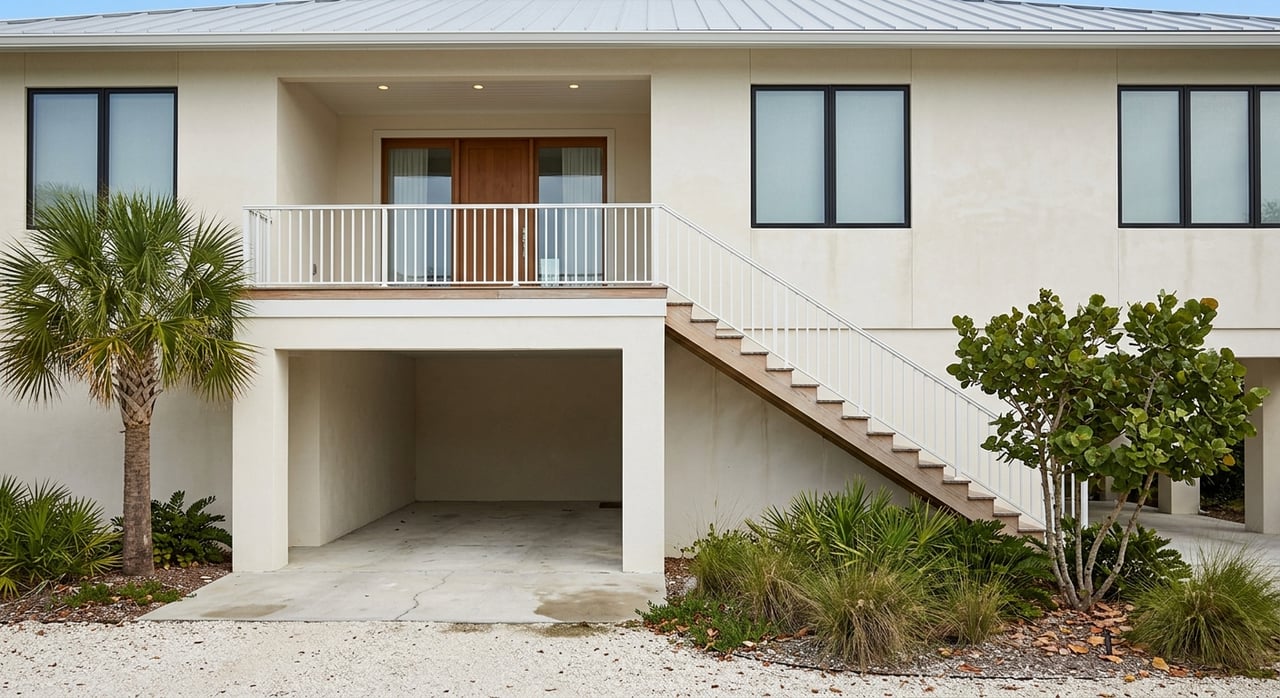
Dreaming about a second home in Seagrove Beach? It is easy to fall for the sand, the bike rides, and the laid-back 30A setting, but choosing the right property takes more than finding a pretty house near the water. If you want a place that fits your lifestyle, works for occasional rental use, and still feels easy to own, you need to look closely at access, rules, and long-term flexibility. Let’s dive in.
Start With Beach Access
In Seagrove Beach, beach access can matter as much as the home itself. A property may look close to the Gulf on a map, but your day-to-day experience can be very different depending on the nearest access point.
Walton County shows that Seagrove-area beach accesses are not all the same. Some are pedestrian-only with no parking, while others offer parking, restrooms, ADA features, bike parking, or dune walkovers. That means your real question is not just, “How far is the beach?” but also, “How easy is it to use?”
For example, nearby access points such as HWY 395, Nightcap, Live Oak, and Hickory are listed as no-parking accesses. Santa Clara Regional Beach Access includes parking, restrooms, ADA compatibility, and a picnic pavilion. Seagrove Regional Beach Access, opened by Walton County on April 8, 2026, adds 23 parking spaces, restrooms, an ADA-accessible dune walkover, rinse showers, bike parking, a multi-use path connection, and lifeguards.
If you plan to use your second home often, or host family and friends, that difference matters. If you may rent the property part of the year, usable access can also shape how practical the home feels for guests.
Questions To Ask About Access
- Is the closest beach access pedestrian-only?
- Does it have parking, and if so, how much?
- Are there restrooms or rinse showers nearby?
- Is there bike parking or a path connection?
- Would carrying chairs, coolers, or beach gear be realistic from this property?
Understand Seagrove’s Different Settings
Not every part of Seagrove Beach feels the same. Old Seagrove, in particular, has a distinct character that can appeal to second-home buyers who want a more established beach setting.
Walton County defines Old Seagrove as the single-family area bounded by Seaside on the west, County Road 395 on the east, the Gulf on the south, and a Western Lake tributary on the north. The county also notes that the neighborhood originally centered on smaller beach-cottage lots, while later development included larger short-term-vacation-rental style homes that changed the area’s character over time.
That context matters when you compare Seagrove with newer planned communities along 30A. Some buyers want a more traditional coastal neighborhood feel, while others prefer a property with a newer layout or a more rental-oriented setup.
Decide Between A Condo And A House
One of the biggest second-home decisions in Seagrove is whether you want a condo or a single-family home. Each can work well, but the trade-offs are different.
Why A Condo May Fit Better
A condo can be a smart choice if you want a more turn-key second home. In general, condos tend to reduce some of the hands-on exterior maintenance that comes with owning a house, but they also require closer review of association finances, inspection records, and reserve planning.
Florida condominium law requires associations to maintain official records that include budgets, financial reports, contracts, inspection reports, and, when applicable, structural integrity reserve studies. The law also requires the most recent annual financial statement and annual budget to be available on the property for unit owners and prospective purchasers.
That makes condo due diligence especially important before you make an offer. A lower-maintenance lifestyle can be appealing, but only if the association is handling major work and reserve funding responsibly.
Why A House May Fit Better
A single-family home can offer more privacy and control over how you use the property. That can be especially appealing if you want more space, a private outdoor setup, or flexibility for family visits.
In Old Seagrove, Walton County says the area remains a single-family residential district with one dwelling unit per platted lot. The county also limits building height to 40 feet and does not allow commercial or multi-family uses inside the overlay except for existing commercial parcels at the northeast corner of Highway 30A and Highway 395.
If you are buying a house because you may want to renovate, expand, or rebuild later, local rules become a major part of the decision. Walton County also notes that the Route 30A Scenic Corridor Overlay applies to properties contiguous to County Road 30A, County Road 393, and County Road 395, plus certain portions of County Roads 83 and 283 south of U.S. 98.
A Simple Way To Compare
| Property Type | Best Fit For | Key Watch-Out |
|---|---|---|
| Condo | Buyers who want simpler ownership and shared maintenance | Association reserves, assessments, and inspection history |
| Single-family home | Buyers who want more control and space | Overlay rules, site restrictions, and future renovation limits |
Review HOA Or Condo Documents Early
If a property has an association, start your document review before you get emotionally attached. The monthly fee alone does not tell you whether the property is well run.
For condos, Florida law requires records such as budgets, financial reports, contracts, inspection reports, and reserve-related documents. For homeowners associations, Florida law requires official records, annual budgets, reserve-account treatment, and annual financial reporting, and records must be maintained in Florida for at least seven years.
The same HOA law says records must be made available to a parcel owner within 45 miles of the community or within the county within 10 business days after a written request. If an association is slow, vague, or hard to work with on records, that can be a useful warning sign.
Ask For These Documents
- Declaration
- Bylaws
- Rules and regulations
- Current budget
- Reserve balance
- Most recent financials
- Pending assessments
- Rental policy
- Parking rules
- Building inspection reports, if applicable
In Seagrove, a healthy association is usually more important than a low monthly fee. Underfunded reserves can lead to special assessments, and those costs can change the math of a second home very quickly.
Think Carefully About Rental Use
Many second-home buyers want the option to rent their property part of the year. In Seagrove, that means rental rules should be part of your purchase decision from the start, not something you check later.
Walton County treats short-term vacation rentals as a regulated use. The county says short-term rentals require annual registration, and the 2026 schedule lists $300 per property for an individual registration, $227 per property for a community registration, and $500 per day for operating without registration.
The county also says renewals are annual and aligned to a June 1 cycle, with the renewal window opening April 1 and renewals due 60 days before expiration. If rental income is part of your plan, these deadlines and costs matter.
Rental Compliance Items To Confirm
Walton County requires short-term rental guest agreements to include:
- Maximum occupancy
- Noise ordinance notice
- Trash and recycling days
- Evacuation-order language
- Maximum on-site parking details
The county also requires on-site postings with the property address, responsible-party contact, occupancy, parking, noise, trash, sea turtle lighting notice if applicable, and the nearest hospital.
In addition, rental advertising must match the property approval and include the Short-Term Vacation Rental Certificate Number and the TDT Registration Number. Walton County also says all short-term rentals require annual registration regardless of zoning, including state DBPR licensing and tourist development tax registration.
Make Sure The Property Can Actually Support Rental Use
Not every home that looks like a rental opportunity works smoothly in practice. Parking, occupancy, layout, and local management support all affect whether the property is truly rental-ready.
Walton County requires one short-term vacation rental responsible party per property at any given time. If that person is an individual, an alternate is required during periods of unavailability. For many out-of-town second-home owners, that makes dependable local management support an important part of the buying decision.
You should also watch for assumptions about guest houses or carriage houses. Walton County says small accessory dwelling units under 800 square feet cannot be used as short-term vacation rentals separate from the primary residence.
Check Your Long-Term Flexibility
A second home can evolve over time. You may use it mostly for family trips now, rent it later, or even consider making it your primary residence down the road.
That is why exit flexibility matters. A strong purchase should still make sense if your plans change in five or ten years.
Walton County’s planning guidance says buyers should ask about flood zone, wetlands, setbacks, stormwater requirements, building height, and other site-specific restrictions before purchasing a lot or land. This is especially important if you are considering a remodel or rebuild rather than simply buying a move-in-ready home.
There are also tax and residency distinctions to keep in mind. Walton County’s Property Appraiser says homestead exemption requires that the owner hold legal or beneficial title and, in good faith, make the property his or her permanent residence. In other words, you should not assume a Seagrove second home will qualify for homestead treatment unless it truly becomes your primary residence.
Use These Five Filters On Every Listing
When you compare Seagrove properties, it helps to use the same framework every time. That keeps emotion from taking over too early.
1. Beach Access
Look beyond straight-line distance. Confirm whether the nearest access is pedestrian-only, has limited parking, or works more like a regional access with better amenities.
2. Association Health
If the property has an HOA or condo association, review reserves, current financials, and any pending assessments or major repair issues.
3. Use Flexibility
Check whether the property is a condo, a single-family home, or a lot in an area with overlay rules. In Old Seagrove, density, height, and permitted uses can shape what you can do later.
4. Rental Compliance
Make sure the property can realistically meet occupancy, parking, registration, tax, and responsible-party requirements if you plan to rent it.
5. Exit Flexibility
Ask whether the home would still appeal if you later use it differently. A property that works only for one narrow purpose can limit your options later.
What A Strong Seagrove Second Home Often Looks Like
In practical terms, a strong second-home purchase in Seagrove often fits one of three paths. It may be a low-maintenance condo with solid reserves and clear rules, a single-family home with realistic beach access and manageable local restrictions, or a rental-friendly property with adequate parking, local management support, and a layout that can meet county standards.
The right choice depends on how you plan to use the home. Some buyers want lock-and-leave simplicity. Others want space, privacy, or renovation potential. The key is making sure the property supports your real-life goals, not just the dream version of ownership.
If you want expert guidance on comparing condos, homes, and rental-friendly properties in Seagrove Beach, the local team at Sold in Paradise can help you evaluate the details that matter most.
FAQs
What matters most when choosing a second home in Seagrove Beach?
- The biggest factors are beach access, property type, association health, rental rules, and long-term flexibility.
How should buyers compare beach access in Seagrove Beach?
- You should compare whether the nearest access is pedestrian-only, has parking, or includes features like restrooms, ADA access, bike parking, and lifeguards.
What should condo buyers review before buying in Seagrove Beach?
- Condo buyers should ask for the current budget, reserve information, financial statements, inspection reports, contracts, and any history of major repairs or special assessments.
What should house buyers check before buying in Old Seagrove?
- House buyers should verify overlay rules, height limits, density rules, flood zone, setbacks, wetlands, stormwater requirements, and any renovation or rebuild restrictions.
What are the short-term rental rules for a second home in Seagrove Beach?
- Walton County requires annual short-term rental registration and compliance with occupancy, parking, posting, guest agreement, and advertising rules.
Can a Seagrove Beach second home qualify for homestead exemption?
- A second home generally does not qualify unless it truly becomes your permanent residence under Walton County Property Appraiser requirements.