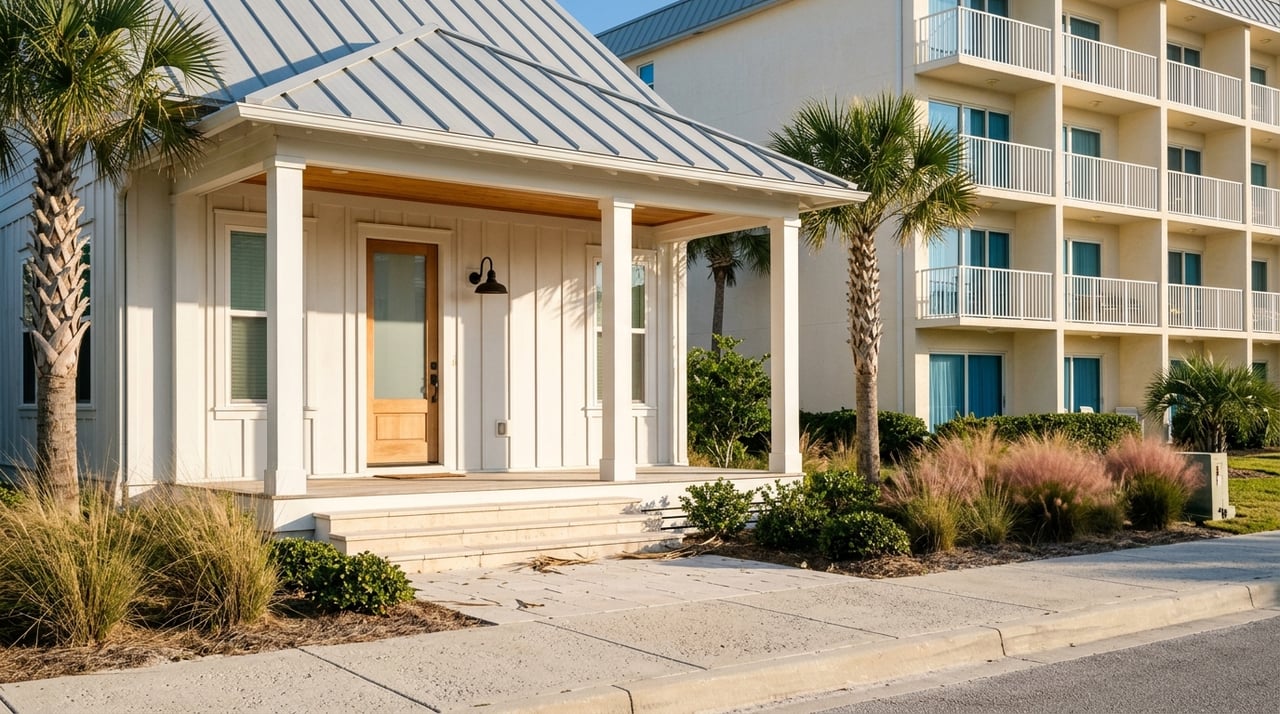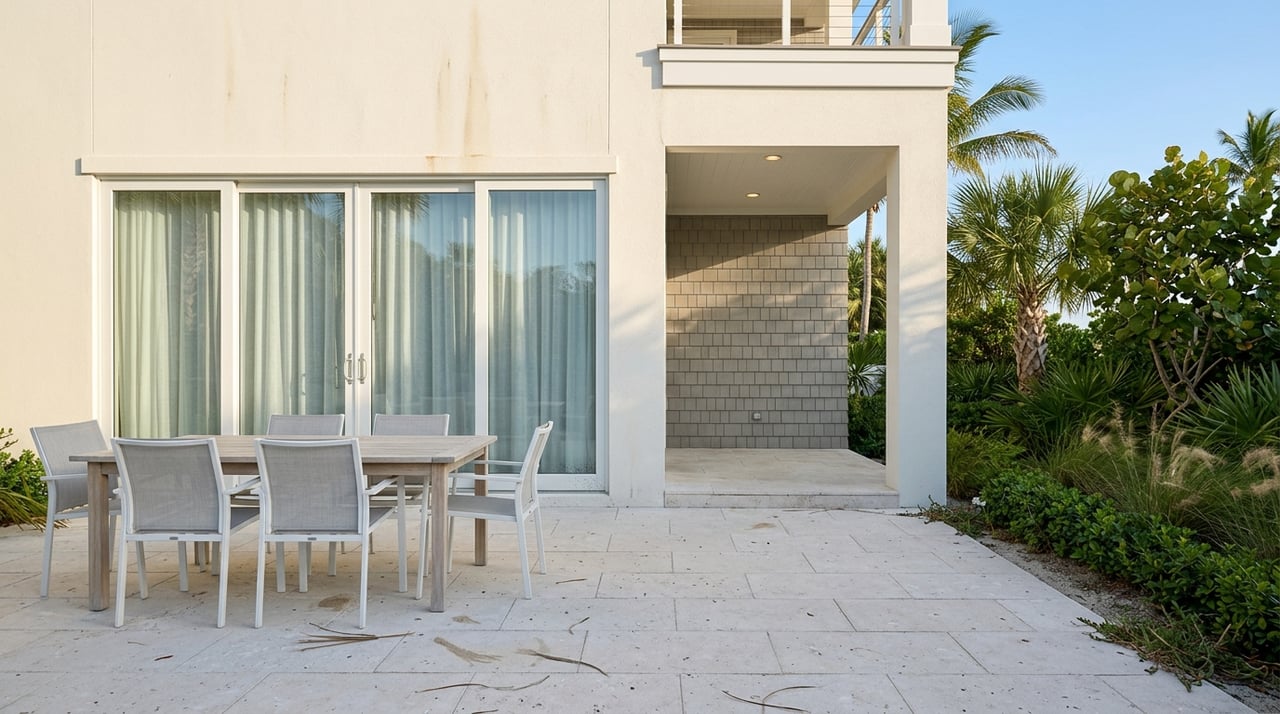
Wondering whether a WaterColor property will be easy to rent and simple to budget for? That question matters, especially if you are buying a second home or investment property on 30A and want the numbers to work in real life, not just on paper. The good news is that WaterColor has a well-defined system, but it includes several layers of rules, fees, and approvals you need to understand before you buy. Let’s dive in.
How WaterColor rental rules work
WaterColor is not a one-rule-fits-all community. The master association is managed by CCMC, but some parts of WaterColor also fall under separate sub-associations with their own management and assessments.
The community’s estoppel information specifically names Town Center Condominium and Beachside Condominium as separate sub-associations. That means your ownership costs and paperwork can vary depending on where the property sits within WaterColor.
It is also important to separate HOA compliance from resort-style services. WaterColor notes that The St. Joe Company operates the WaterColor Inn and LakeHouse, leases commercial spaces, and handles certain beach and food-and-beverage services, but that is not the same thing as handling your rental compliance.
WaterColor short-term rental portal requirements
Since February 1, 2024, WaterColor has required all short-term rentals to register through its Short-Term Rental Portal. In WaterColor, a short-term rental means any rental for less than 6 months.
The HOA also uses an Annual Owner Certification process. That certification supplies the maximum number of guests allowed for the property, and that limit is controlled through the portal software.
Deadlines matter here. For the 2026 cycle, WaterColor announced that owners hosting rental guests or unaccompanied guests had to file the Annual Owner Certification by October 15, 2025, and owners who missed that deadline could not register rental stays for 2026.
Occupancy and guest access rules
If you are estimating rental income, occupancy rules are one of the first details to verify. WaterColor’s maximum rental occupancy policy limits rentals to two people per bedroom, plus two additional people for one- and two-bedroom homes, or plus four additional people for homes with three or more bedrooms.
Not every sleeping space counts as a bedroom. WaterColor states that only bedrooms approved on the Design Review Board’s construction plans count toward that formula, while spaces labeled bunkrooms, media rooms, offices, bonus rooms, studies, or lofts do not count as bedrooms for occupancy purposes.
Guest access also comes with its own process. Guests age 5 and older must wear an access credential, and the number of credentials issued cannot exceed the property’s certified occupancy.
Owners can request guest credentials themselves or have a rental management company representative do it. Full payment of guest fees is required before credentials are issued, and as of February 2026, wristband requests and guest fees must be submitted at least 48 hours before arrival whenever possible.
WaterColor guest fees to budget for
Guest fees are a real operating expense in WaterColor, not a small footnote. The HOA sets the guest fee annually through its Finance Committee and Board approval, and the stated purpose is to recover the marginal cost of guest use of amenities and HOA operations.
As one posted example, the 2025 guest fee was $9.00 per person, per night, charged against the property’s maximum certified number of guests. Because the fee is set annually, you should treat it as a variable cost rather than assume the same amount every year.
The HOA also distinguishes between short-term and long-term stays. Named guests staying 6 months or longer can receive credentials without a guest fee, while rentals shorter than 6 continuous months must pay the current guest fee.
Parking and low-speed vehicle rules
Parking rules can affect both guest experience and ownership costs. WaterColor prohibits parking on streets, sidewalks, pathways, and pine straw, so guests can park only in driveways, parking pads, and marked spaces.
Violations can lead to a $100 fine, booting, or towing. That is one reason owners and managers need a clear arrival and parking plan before guests check in.
Rental guests also need to follow WaterColor’s seasonal paid parking system at the Beach Club, Camp WaterColor, and WaterColor Boulevard South in Town Center. The seasonal parking fee is $25 per transaction from March 1 through October 31.
Low-speed vehicles have separate rules too. WaterColor says the Electric Cart Company is the exclusive LSV operator, only one LSV is allowed per property address, and LSV registrations must be renewed annually with the HOA.
Walton County rental rules in WaterColor
WaterColor HOA rules are only part of the picture. Walton County also regulates short-term vacation rentals, and owners need to understand whether the county certification process applies to the property type they are buying.
Walton County defines a short-term vacation rental as a property rented more than three times in a calendar year for stays of less than 30 days, or any property advertised as regularly rented to guests. Covered properties must obtain a Short-Term Vacation Rental Certificate.
The county’s current FAQ states that the annual certificate fee is $300 per short-term vacation rental structure. Renewals for the 2026-2027 cycle and beyond are due June 1 each year, with the renewal window opening April 1.
There is one important exception. Walton County says condominiums are excluded from the certification process, though Florida tax and licensing requirements still apply.
The county also requires a locally available responsible party for short-term vacation rentals. That person must be able to respond to problems, accept legal notices, and monitor compliance at least weekly.
Advertising rules matter too. Walton County requires rental advertising to match the approved certificate information and include both the county certificate number and the Tourist Development Tax registration number.
Self-managing vs hiring help
WaterColor’s rules allow both self-management and third-party management. The HOA’s own policies refer to rental management companies and also to owners who self-manage rental properties.
Walton County also allows a property manager to apply on the owner’s behalf if the proper affidavits are completed. So the question is usually not whether management is required, but whether you want to handle day-to-day compliance yourself.
For out-of-town owners, the local responsible party requirement is often the deciding factor. Even if you book guests through a platform, someone still needs to be available locally to respond, receive notices, and help keep the property compliant.
WaterColor ownership costs to expect
When you budget for a WaterColor purchase, it helps to break costs into four buckets: HOA assessments, guest and amenity fees, taxes, and operations. That structure mirrors how the community and county actually administer the property.
HOA dues and special assessments
WaterColor assessments are billed quarterly and due on January 1, April 1, July 1, and October 1. According to the HOA, the assessment includes HOA dues, cable, and internet, plus the special assessment for the Camp WaterColor and Beach Club expansion unless that special assessment has already been paid in full.
The special assessment is a notable long-term expense. WaterColor states that it is $330 per quarter until 2030, though the balance may be paid off at closing.
Late payments can create more than just extra fees. If a payment is more than 60 days late, late fees and interest apply, and amenity access can be suspended.
Rental taxes in Walton County
Short-term rental tax planning is another major part of your budget. Florida’s general state sales tax rate is 6%, and transient rentals of 6 months or less can also be subject to county surtax and local option transient rental taxes.
In Walton County, the current discretionary surtax rate is 1%, and South Walton’s tourist development tax rate is 5%. For many WaterColor short-term rentals, that means a layered tax burden rather than one simple tax line.
The Walton County Clerk also warns that some booking platforms may collect and remit state and local sales tax, but Walton County has no platform agreements for the county tourist development tax. If you use more than one booking channel, you will want to verify exactly who is remitting each tax.
Property taxes and exemptions
Property taxes are based on assessed value, millage rates, and any exemptions. Walton County’s Property Appraiser states that homestead exemption is available only when the property is the owner’s permanent residence on January 1 and declared as the owner’s primary residence.
For many second-home buyers and investors in WaterColor, that usually means homestead savings are not available. That is an important detail when comparing a personal-use property to a full-time primary residence.
Small costs that still add up
Some of WaterColor’s smaller recurring costs can still affect your annual numbers. These can include seasonal paid parking charges, parking violation fines, and replacement costs for lost access credentials.
If the property includes an LSV, you also need to factor in annual HOA registration and the community’s operator restrictions. These items may not be the largest line items, but they can make your operating budget more realistic.
What to verify before you make an offer
Before you rely on a projected rental income number, it is smart to confirm the property’s sub-association status and whether separate management or assessments apply. That one detail can change both your cost stack and your paperwork process.
You should also verify whether Walton County short-term vacation rental certification applies to the specific property type. This is especially important when comparing a condominium to a detached home.
Other key items to confirm include:
- The current annual guest fee schedule
- The property’s certified occupancy
- Whether there is an established local responsible party
- Whether the owner intends to self-manage or use a third-party manager
- Whether any special assessment balance will be paid at closing
In WaterColor, these details matter just as much as your mortgage estimate or insurance quote. A well-bought property usually starts with clear answers before you go under contract.
If you are weighing a WaterColor purchase, local guidance can help you look beyond the list price and understand how the ownership model works in practice. The team at Sold in Paradise can help you compare properties, ask the right questions, and plan around the real costs of owning along 30A.
FAQs
What counts as a short-term rental in WaterColor?
- In WaterColor, a short-term rental is any rental for less than 6 months, and those rentals must be registered through the community’s Short-Term Rental Portal.
How does WaterColor set rental occupancy limits?
- WaterColor limits occupancy to two people per bedroom, plus two extra people for one- and two-bedroom homes, or plus four extra people for homes with three or more bedrooms, using only approved bedrooms on the Design Review Board plans.
Do WaterColor guests have to pay amenity-related fees?
- Yes. Short-term rental guests generally require access credentials, and WaterColor charges a guest fee that is set annually and paid before credentials are issued.
Does Walton County require a rental certificate for WaterColor properties?
- Walton County requires a Short-Term Vacation Rental Certificate for covered properties, but the county states that condominiums are excluded from that certification process.
What ongoing ownership costs should you budget for in WaterColor?
- You should budget for quarterly HOA assessments, the current special assessment if unpaid, guest fees, short-term rental taxes, property taxes, and operating costs such as parking-related charges or credential replacement costs.